PVD vs Gold Plated Jewellery: Which Lasts Longer
PVD and standard gold plated jewellery can look identical on a product page, but they are made by two completely different processes. The difference decides whether your earrings can survive five years of daily swimming or start fading after six months. If you have been browsing tarnish-free jewellery in the UK, PVD is the acronym that keeps showing up.
In short, PVD (Physical Vapor Deposition) bonds gold to a stainless steel base inside a vacuum chamber, creating a molecular bond that resists scratching, chlorine and sweat far longer than standard electroplated gold. This guide breaks down how each process actually works, how long each one lasts, and how to choose the right one for what you actually wear.

What PVD and Standard Gold Plating Really Are
The two processes share an outcome (a gold-coloured surface on a non-gold base) but almost nothing in how they get there. Understanding the gap is the only way to read product descriptions accurately when you shop.
PVD: aerospace technology adapted for jewellery
PVD stands for Physical Vapor Deposition. It is a coating technique originally developed for aerospace components, cutting tools and medical implants, where hardness and corrosion resistance matter more than appearance. The process happens inside a sealed vacuum chamber. A solid gold target is vaporised by an electron beam at temperatures above 1,000 degrees Celsius. The vaporised gold atoms travel across the chamber and embed into the surface of the base metal, which is typically 316L surgical-grade stainless steel.
The result is not a layer sitting on top of the base, it is a molecular bond. Gold atoms are physically embedded into the stainless steel surface, which is why PVD coatings cannot be peeled, scratched off easily, or dissolved by sweat or chlorine. The coating thickness is typically 1 to 3 microns, applied uniformly across the entire piece. Pieces come out of the chamber with a finish that looks (and behaves) closer to solid gold than any electroplated jewellery on the market.

Standard gold plating: the older electrolyte process
Standard gold plating (also called electroplating or gold flash plating) uses a completely different process. The base metal, typically brass, copper or a zinc alloy, is submerged in an electrolyte bath containing dissolved gold ions. An electrical current passes through the bath, which deposits gold ions onto the surface of the base one layer at a time. You can read the formal definition on Wikipedia if you want the chemistry detail.
The gold forms a visible coating on top of the base, but it is sitting on the surface rather than embedded in it. Coating thickness on standard plated jewellery varies wildly, from 0.175 microns on cheap costume pieces to 2.5 microns on premium electroplated jewellery. The bond is mechanical (the gold layer sticks to the base) rather than molecular, which is the key reason it wears off faster. Within months of daily contact with skin, water and friction, the coating begins to thin in high-wear zones, eventually exposing the base metal underneath.
The comparison at a glance
| Criteria | PVD Coating | Standard Gold Plated |
|---|---|---|
| Base metal | 316L stainless steel (surgical grade) | Brass, copper, zinc, sometimes silver |
| Application method | Vacuum chamber, vaporised metal | Electrolyte bath, electrical current |
| Gold layer thickness | 1 to 3 microns | 0.175 to 2.5 microns |
| Bond type | Molecular, embedded | Surface coating, adhered |
| Typical karat | Usually 18k | Often 10k to 18k |
| Hardness (Vickers) | 1,200 to 2,000 | 80 to 150 |
| Daily wear lifespan | 2 to 5 years | 3 to 12 months |
| Re-platable? | No, replaced when worn | Yes, every 5 to 10 years |
Why PVD Wins on Daily Wear
The durability gap between PVD and standard gold plating is the single biggest reason waterproof jewellery brands moved to PVD almost universally between 2018 and 2024. The difference comes down to three measurable physical properties.
Hardness. PVD coatings measure roughly 1,200 to 2,000 on the Vickers hardness scale, depending on the specific gold alloy used. Standard electroplated gold sits around 80 to 150 Vickers. That gap is not marketing puff, it is why a PVD ring stays mirror-finish after eighteen months of daily wear while a comparable plated ring shows visible scuffing within weeks. Vickers hardness translates directly into resistance against the micro-abrasions that come from contact with watches, keys, fabric and other jewellery.
Bond integrity. Because PVD atoms are embedded in the base, water, sweat and chlorine cannot get between the gold layer and the stainless underneath. With standard plating, the surface coating slowly separates from the base over time, especially in contact with chlorine or salt water. This is the actual mechanism behind jewellery turning your skin green: the underlying brass or copper oxidises once the gold layer compromises, and the oxide transfers to skin.
Hypoallergenic base. PVD is applied over 316L stainless steel, which is the same medical-grade alloy used in surgical implants and contains no nickel salts. Standard gold plating typically sits on brass or copper, which leach trace metals through worn spots and cause skin reactions for the 15 to 20 percent of people with metal sensitivity. The two failure modes (visual fade and skin reaction) usually happen on the same timeline, which is why standard plated jewellery rarely lasts a full year of continuous wear.
Where the gap shows up in real life
The choice between PVD and standard gold plating matters most when the piece is worn daily. Here is how it plays out in three typical contexts.

Everyday earrings. Earrings live in the highest-wear category. They contact hair products, skincare, sweat, phone screens, pillow fabric, and often stay in through showers and spa visits. Standard plated hoops fade within four to eight months of continuous wear. PVD-coated earrings hold their finish for two to three years on the same wear pattern, and the wear shows up evenly across the piece rather than as patchy fade.

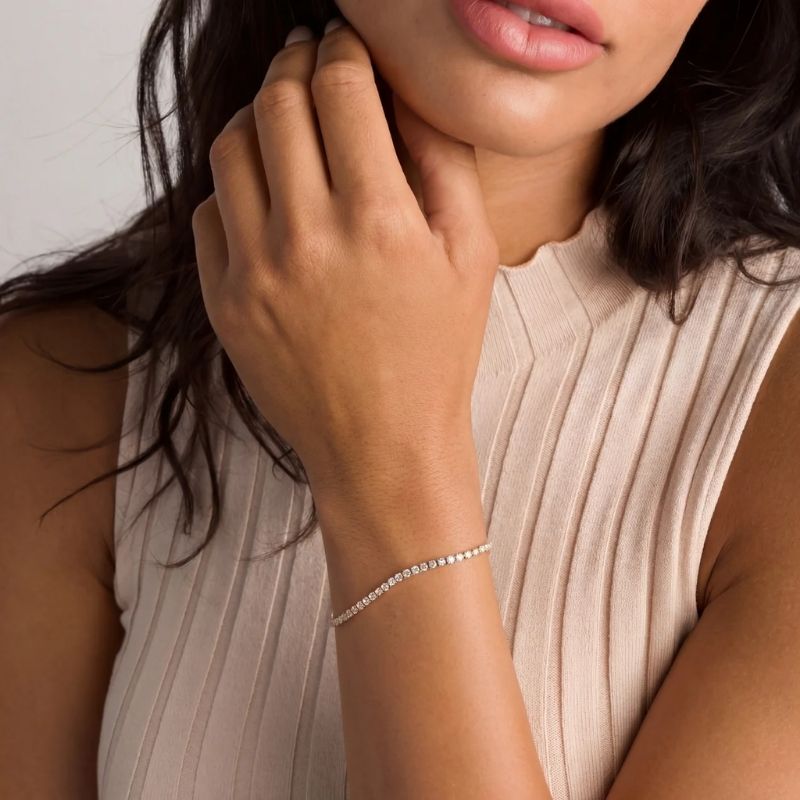
Tennis bracelets and stacked rings. Pieces that contact other jewellery (a watch, a stack of rings, a tennis bracelet against a cuff) take constant friction. The Vickers hardness of PVD means the surface resists the micro-abrasion that would dull standard plated pieces within months. Waterproof bracelets built on PVD survive this without dulling, even when stacked or worn against a watch face all day.

Sensitive skin and humid climates. Sweat acidity, sea air and chlorine all accelerate plating breakdown. Skin reactions follow once the base metal is exposed. PVD over surgical steel removes both failure points at once. If you know you have reactive skin, our hypoallergenic jewellery guide covers how to identify pieces that genuinely qualify for sensitive skin (verifying the alloy of the base, not just the gold layer on top).
When Standard Gold Plating Still Wins
PVD wins on daily wear. It does not win on everything. Three contexts where standard gold plating remains the right choice:

Pieces you want to re-plate over decades. If a piece is a long-term keepsake (an engagement-style ring, a name necklace passed down) and you intend to re-plate it every ten years, silver-based electroplating (vermeil) is the better substrate. PVD on stainless is not designed to be re-plated. When the finish eventually wears, the piece is replaced rather than refinished. Our deep dive on gold vermeil versus gold plated covers this trade-off in detail.
Artisan and antique styles. Traditional jewellery makers still favour electroplating on brass or silver because it preserves the design vocabulary of fine antique jewellery (filigree, engraving, hand-finishing) that does not translate well to stainless steel manufacturing. Stainless steel is forged and machined, not cast and hand-finished, which limits the visual textures available. If the piece needs to feel hand-made rather than industrial, electroplating is the route.
Cost-sensitive purchases under £20. Below the £20 mark, neither process delivers long-term durability. If a piece is genuinely meant for a season or a single occasion, the standard plating cost saving makes sense. Above £25, PVD becomes the better value because it lasts five to ten times longer for similar money.
On price specifically, PVD is not always more expensive than premium electroplating. The base metal cost is lower (316L stainless is cheaper by weight than brass or sterling silver), and the gold layer thickness sits in the same range as mid-tier plating. The cost premium most consumers expect simply does not exist at scale. What you pay for with PVD is the manufacturing capability to produce pieces that genuinely survive daily wear, not the materials themselves.
Quick Decision Guide: Which Should You Buy?

If you only remember three rules, make them these.
- Worn daily, water contact, sensitive skin? PVD over 316L stainless. No exceptions. Examples: shower earrings, gym tennis bracelet, daily stacking rings. Browse our waterproof necklaces built this way.
- Worn occasionally, indoor wear, planned re-plating? Gold vermeil (silver base + thick gold electroplating). Re-plateable, traditional finish, suits formal pieces and heirloom intent.
- One-off occasion piece under £20? Standard gold plating is fine for the budget. Do not expect more than three to six months of finish life.
For UK buyers comparing brands, the British Jewellers' Association trade body resources provide manufacturer transparency standards worth checking against any brand's claims. Look for explicit mention of "PVD" plus the base metal grade (316L specifically). If a brand says only "gold plated" without specifying the process or base, assume traditional electroplating on brass.
One more practical check: care instructions. If a piece requires removal before showering, swimming or sleeping, it is not PVD on stainless steel. Brands that sell genuine PVD pieces consistently say "wear it everywhere, always" because the chemistry actually supports that claim. Our full care guide for waterproof jewellery walks through what does and does not break PVD over time, including the specific failure modes (chlorinated spa pools over an hour, ultrasonic cleaners, perfume applied directly on the piece).